
Shor’s Algorithm and the Infrastructure Needed for Practical Quantum Computing
In 1994, Professor Peter Shor introduced an algorithm that forever changed the course of quantum computing. Shor’s algorithm showed that a quantum computer could factor very large integers in polynomial time—a task for which no efficient classical algorithm is known. For the first time, quantum computing had a compelling practical application, transforming it from a scientific curiosity into one of the most important technologies of the 21st century.
It was a privilege to meet Professor Shor at Quantum.Tech 2026 and reflect on how that landmark discovery continues to influence every layer of the quantum computing ecosystem.
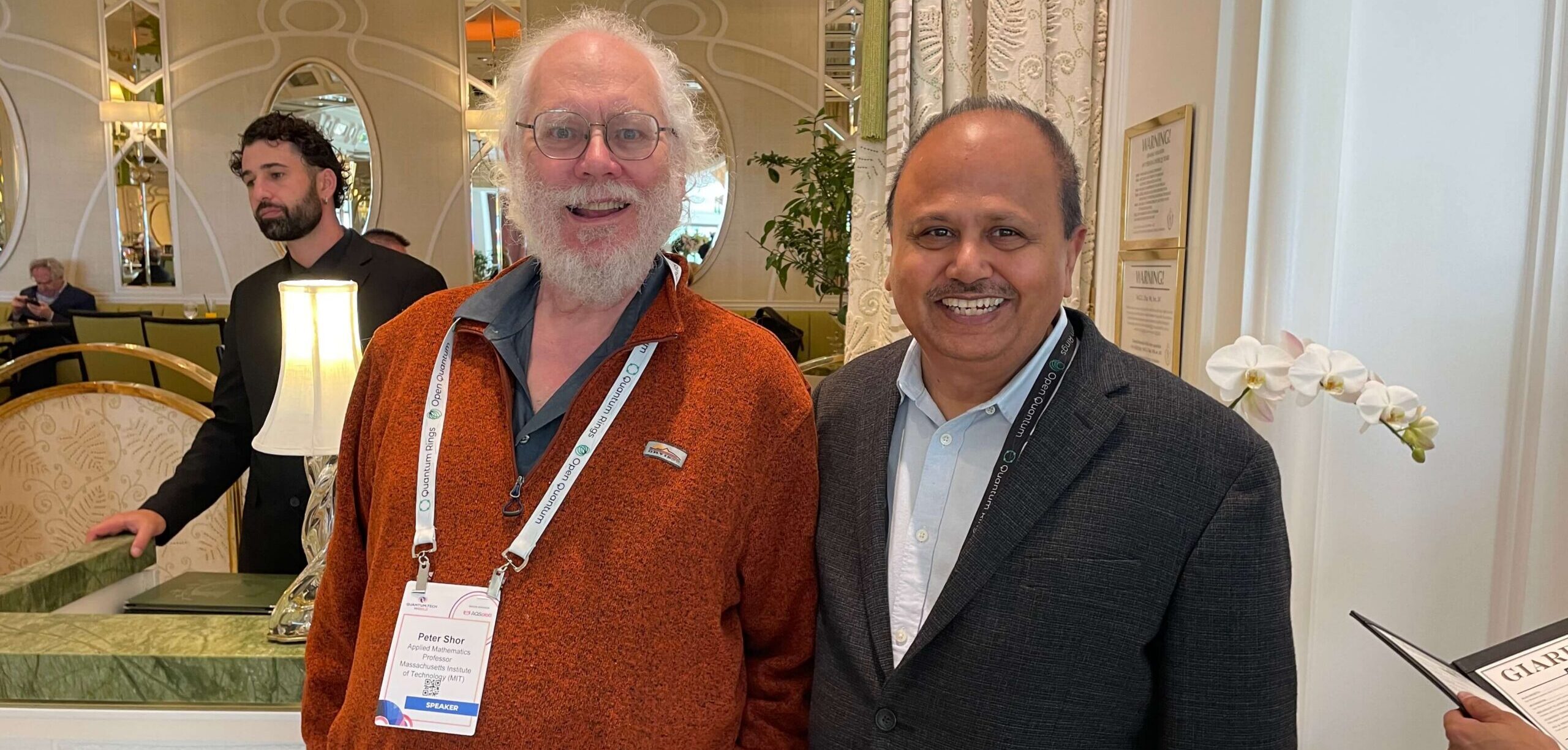
Shor’s algorithm demonstrated what quantum computers could achieve. The challenge before us today is transforming that theoretical promise into practical machines capable of solving problems at scale. That transition depends not only on better qubits and quantum error correction, but also on the engineering infrastructure required to support stable, large-scale quantum systems.
Over the past three decades, researchers around the world have made remarkable progress in quantum processors, control electronics, software, and quantum error correction. Yet one major challenge remains: building quantum computers that are sufficiently large, reliable, and fault tolerant to execute algorithms like Shor’s in practice.
That challenge extends well beyond qubits.
Large-scale superconducting quantum processors require exceptionally stable cryogenic environments. As systems continue to scale from hundreds to millions of physical qubits, refrigeration must evolve alongside the processors themselves. Traditional cryogenic systems remain essential, but future quantum architectures will also benefit from more localized, distributed refrigeration integrated closer to the quantum hardware.
That is the motivation behind ŚŪNYA.
CRYOCHIPS is developing a patented wafer-scale multistage solid-state refrigeration platform designed to complement existing cryogenic systems by providing distributed refrigeration directly at the processor level. Our objective is not simply to cool quantum processors—it is to help create the infrastructure required for larger, more stable, and ultimately fault-tolerant quantum computers.
Algorithms such as Shor’s define what quantum computers can achieve. Infrastructure technologies such as ŚŪNYA are being developed to help create the conditions under which those algorithms can ultimately be executed at practical scale.
Meeting Professor Shor was a reminder that practical quantum computing depends on advances across every layer of the technology stack—from algorithms and hardware to the infrastructure that enables them.
This article is the second in our series, “From Foundations to Infrastructure.” In the final article, we’ll reflect on a personal journey that began in the Cryoelectronics Laboratory at UC Berkeley, where work on hybrid superconductor-semiconductor systems and Josephson-CMOS memories sparked a lifelong interest in superconducting electronics. That journey ultimately led to the founding of CRYOCHIPS and the development of the ŚŪNYA wafer-scale refrigeration platform.